







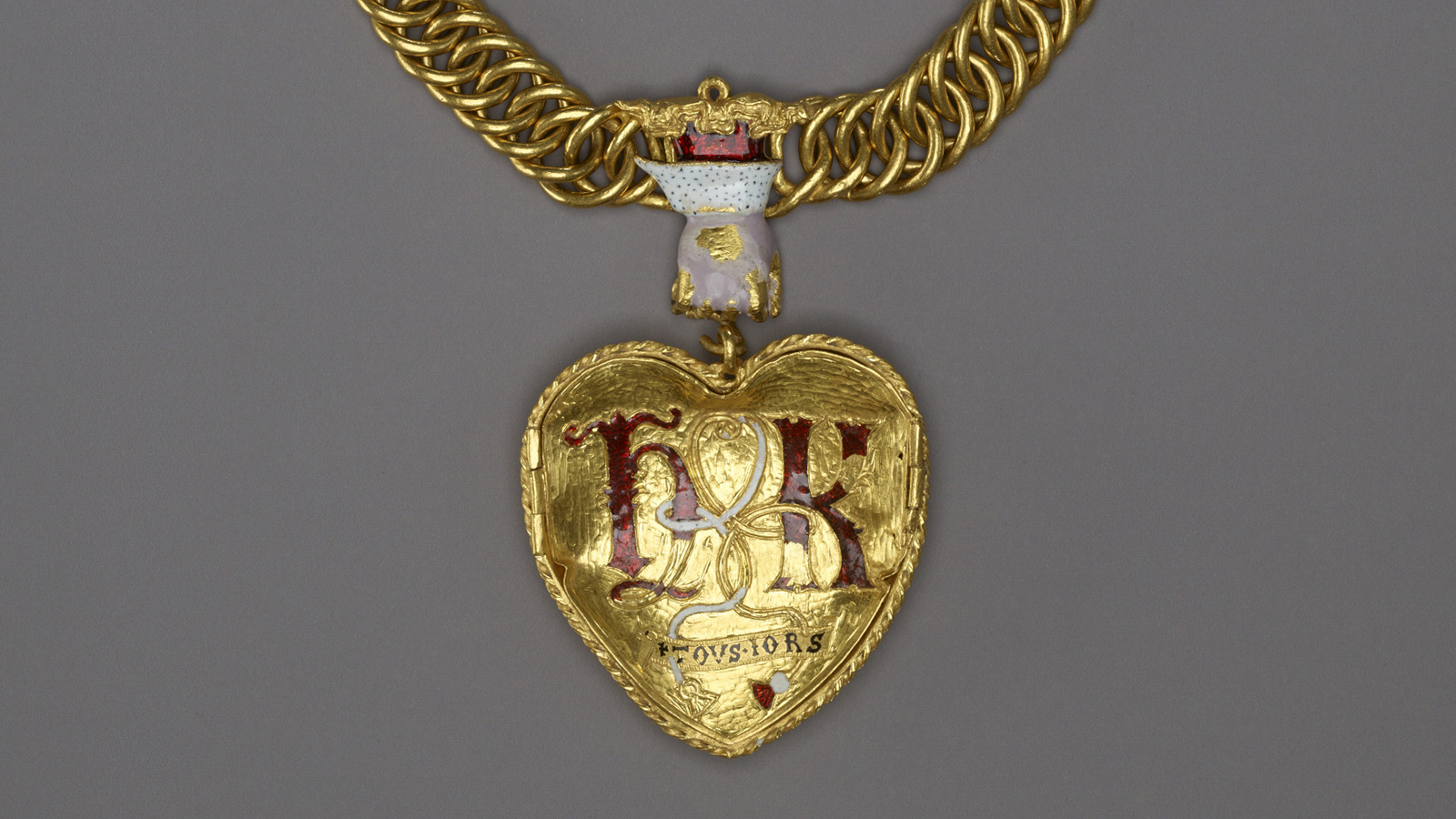
In 2019, a hobbyist metal-detecting in a field in Warwickshire, England, was just about to call it a day when his machinery picked up one more metal object below the surface. Digging to the depth of his elbow he unearthed something absolutely extraordinary, something which would inspire fascination and delight from the archaeological community, Tudor enthusiasts and history buffs – an extraordinary necklace with the intertwined initials and symbols of Henry VIII and his first wife, Katherine of Aragon.
In the years since the discovery research has offered a number of explanations for the piece of jewellery, but the most likely is that it was worn by a member of the court – perhaps even one of the royal couple themselves – at a tournament held to celebrate the betrothal of their daughter, Princess Mary. Made of twenty-four carat gold, it features the letters H and K, the Tudor rose of Henry’s family and the pomegranate of Katherine as well as an archaic version of toujours – always.
Henry VIII is so well known for his series of six marriages that his reign has become little more than a punchline for modern audiences. However, among these marriages, his first is often largely forgotten despite lasting twenty-four years.
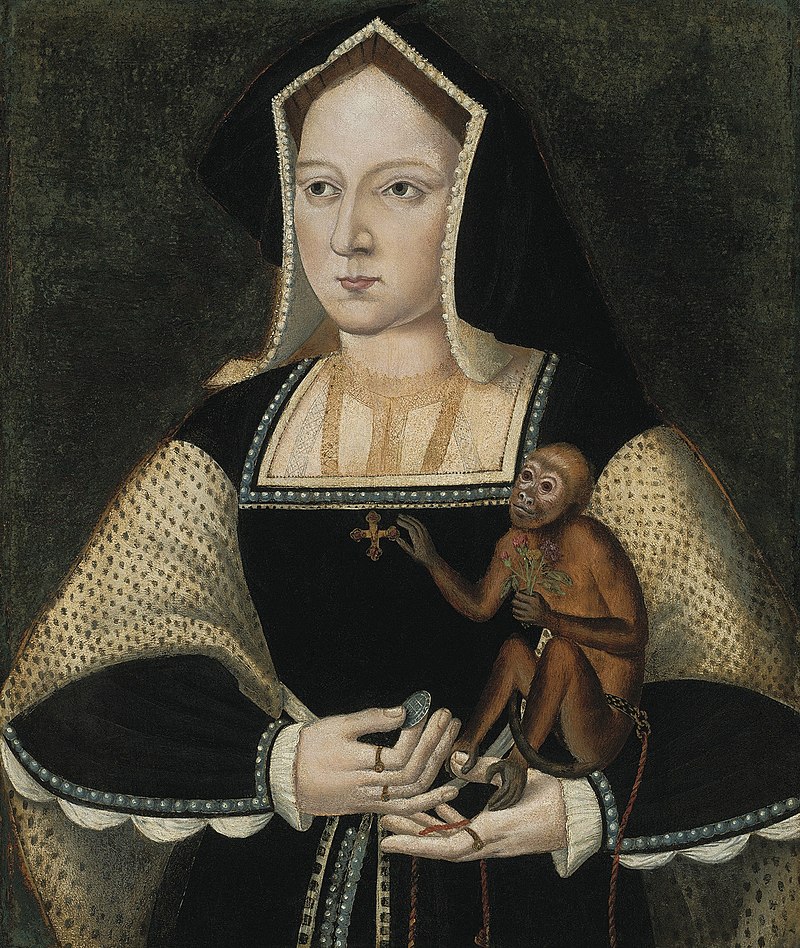
In 1501, Princess Catelina D’Aragona, then fifteen, left her home in Spain behind and arrived on English shores to meet the husband she had been wed to by proxy for the very first time – Prince Arthur. She changed her name to the English spelling when she took on the role of Princess of Wales and got to know her new husband – with some difficulty as they could not communicate by speech, only written Latin. She was extremely well-educated, the daughter of King Ferdinand and Queen Isabella, and by all accounts, beautiful. Six months into her marriage however, her young husband would die and Katherine, by now sixteen, found herself a widow in a strange land with an unknown path before her.
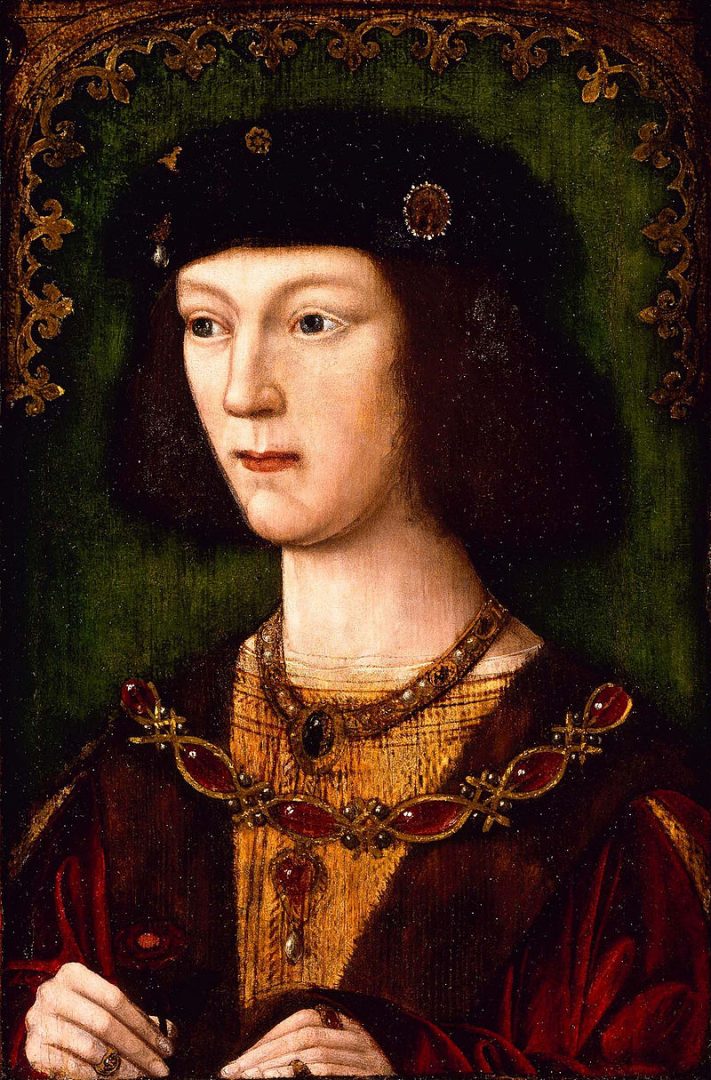
After struggling for several years through ill-treatment and with little money to support herself and her ladies, Katherine pulled a very surprising move – she was wed to Arthur’s younger brother – Henry. This was not a simple thing to achieve, it required a papal dispensation, but the young couple were in love. As anyone familiar with Tudor history can tell you, Prince Henry became one of history’s most famous – or infamous – kings, and his rule is defined by his quest for a male heir, something that would evade him through his marriage to Katherine. Their daughter, Princess Mary (the future Queen Mary I) was born in 1516.
The heart-shaped pendant is a rare survival from this period of history, and renaissance British jewellery is rare. It also speaks of a time oft-forgotten – a period where the young king and his wife were very much in love and the turbulent future brought on by the Reformation was still distant and unthought of.
Currently, the pendant is on display in the British Museum, but should you want to see it in person, there is a possibility you may need to move fast. Owing to law in Britain, the necklace runs the risk of being sold in the near-future. The British Museum have now launched a public appeal to raise £3.5 million before April 2026 in order to prevent this incredible artefact from being sold into a private collection.
So why do we never hear of this sort of thing happening in Ireland? In 2019, when this extraordinary necklace was found, 96% of ‘treasure’ found in Britain was discovered by detectorists. Metal detecting is a hobby among many in Britain but in Ireland metal detecting for historic objects is against the law. Under Irish law metal detecting, magnet fishing or mudlarking without a license carries the possible penalty of a fine of more than €110,000 and/or five years in prison. This is a law which some people feel is unfair, but it is important to understand the reasoning behind this. Ireland is a nation with extraordinary history, and for some of that history our artefacts, our tangible heritage has been dug up, sold off and shipped out. Laws against metal detecting exist to protect our archaeological sites and our artefacts and ensure they remain on this island to be studied and displayed.
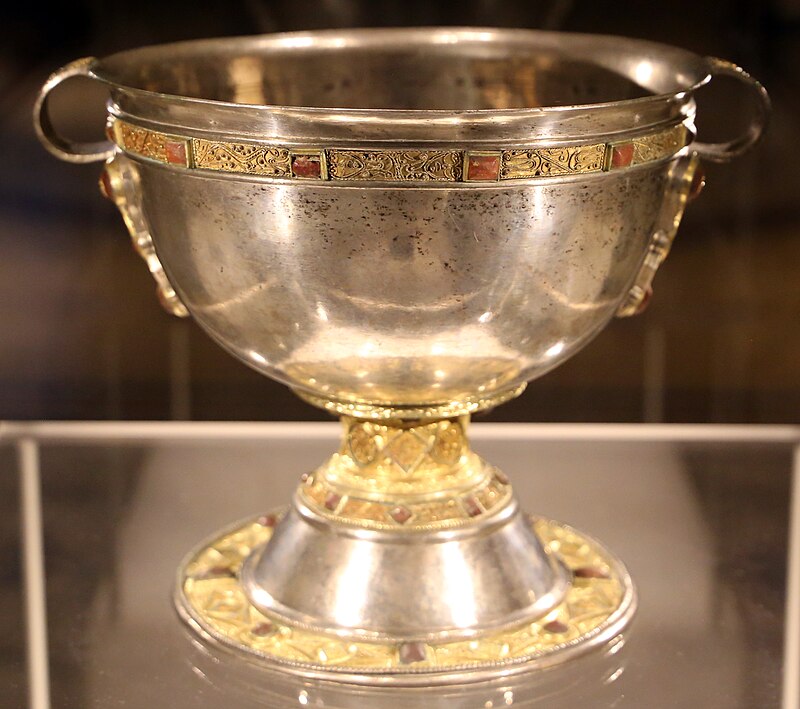
This is not to say that the government is out to punish people who discover artefacts. The legislation is frequently misunderstood, but so too is the issue of ownership over historic artefacts. Archaeological artefacts do not belong to the Irish government, nor to the museums who display them – they belong to the people of Ireland. If you have ever travelled to the National Museum on Kildare Street to marvel at the Tara Brooch or Ardagh Chalice you should know that it belongs in some small part to you. As such should you find something you must report it to a designated museum such as Waterford Treasures or the National Museum of Ireland. Often a finders’ fee will be paid depending on the value of the object to make it worth your while. The issue our nearest neighbours face is that the law there only gives their museums first dibs on the sale of these artefacts. This is why this incredible Tudor necklace could see itself tucked away in a private collection in some other corner of the globe should the museum be unsuccessful in its fundraising goal.
In Waterford Treasures we have a number of Tudor artefacts on display owing to our status as a royal city and a prosperous port throughout the medieval period. In the Tudor period William Wyse – a son of Waterford – operated as a courtier. Henry’s court was a place of intrigue and politics, a place where fortunes changed like the wind. For whatever reason, William seems to have faired well and fostered a close relationship with the mercurial King. Henry was a man’s man, he favoured those who brought him fun and entertainment and could keep up with his appetites – all of them. As such, William’s home city occupied some special place in the King’s head, and we faired as well as William did. Some of them you may be familiar with, others may take you by surprise when you visit the Medieval Museum. Among the treasures are the following highlights:
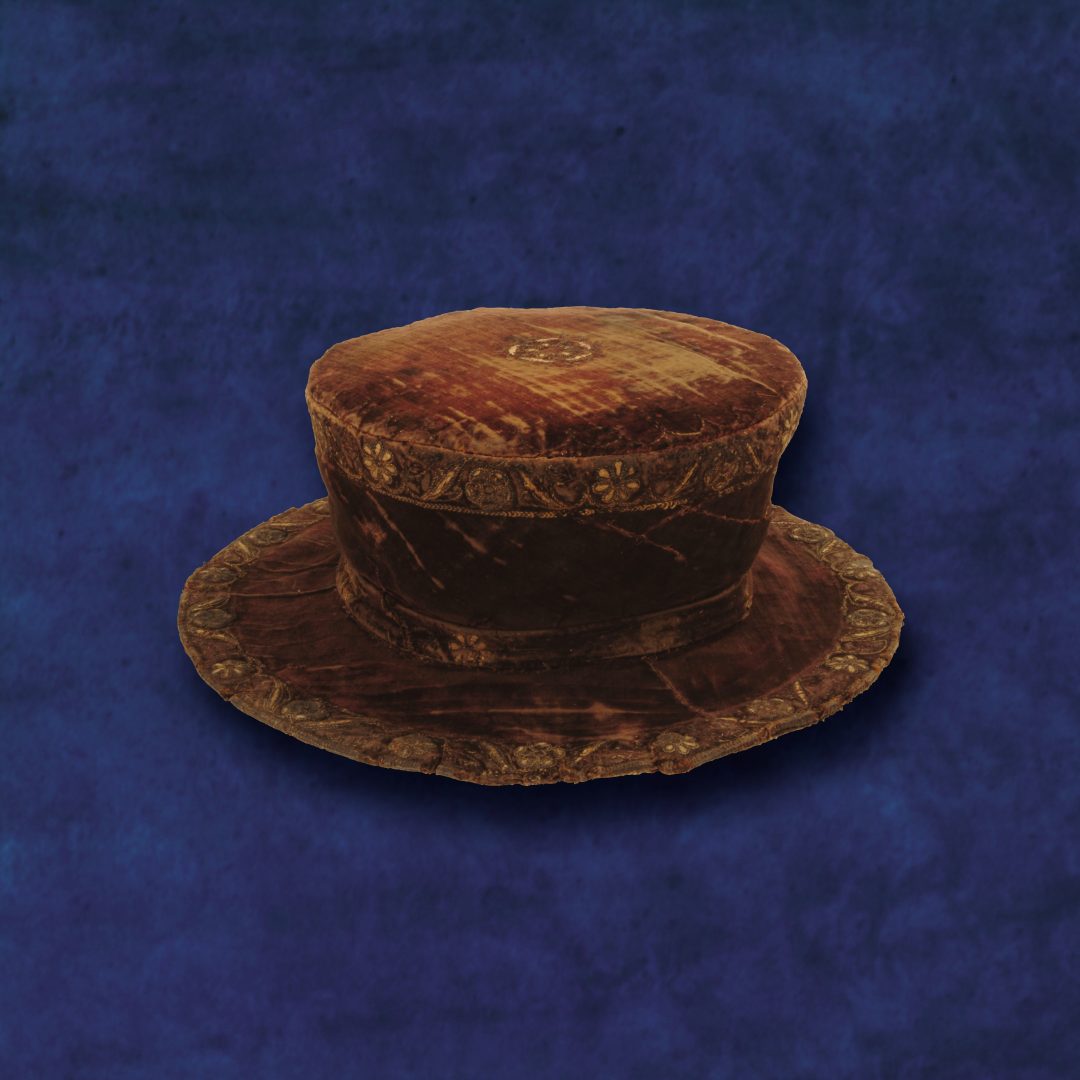
Perhaps the most famous object in our Tudor collection is the Cap of Maintenance of Henry VIII – the only surviving article of clothing attributed to the infamous King. Sets of armour do survive, but textiles are fragile and those from the sixteenth century almost never make it to the present day. The hat dates to 1536 – a big year for Henry, when he had his second wife – Anne Boleyn – put to the sword and married his third, Jane Seymour. The Cap of Maintenance is made of red velvet (which has faded across the centuries to brown) with gold embroidery of marguerites and of course, the Tudor Rose. So how did this incredible artefact survive when nothing else has? For five centuries it has been part of the municipal collection of Waterford Corporation – now Waterford City and County Council – which includes objects and documents of significance to the city deemed worthy of protection and brought out on special occasions. Of course, legend has it the hat was used for many years to break ties in the Mayoral elections… two names in the hat, the first drawn out gets the job!
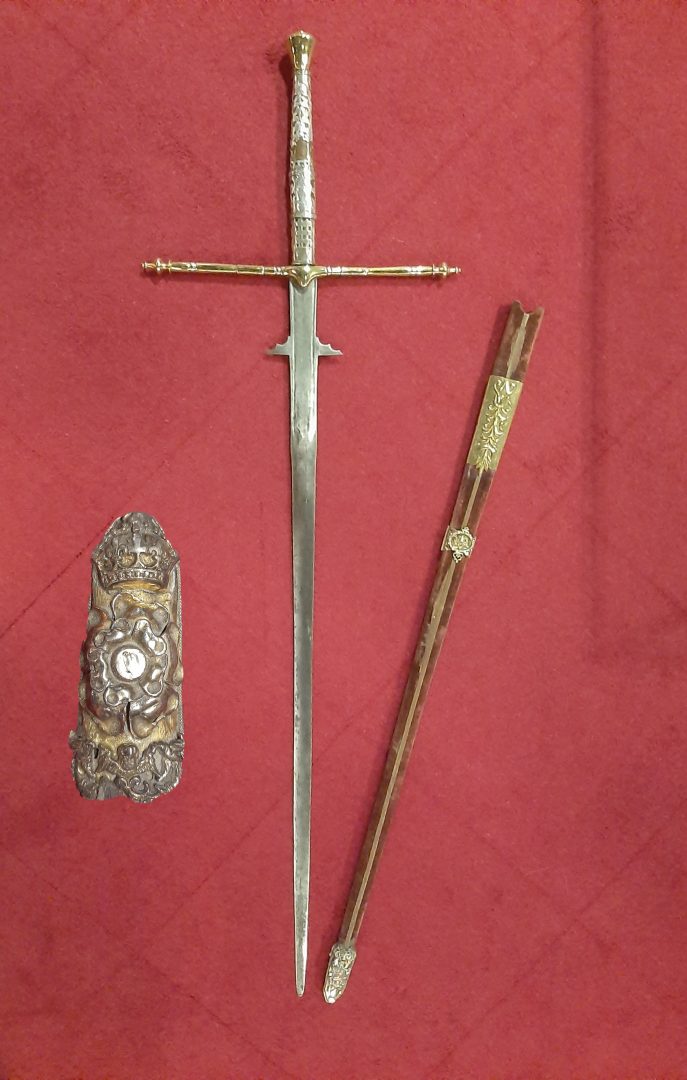
Another object directly associated with the King is the Bearing Sword of Henry VIII – a beautiful piece. The sword was given by Henry to the Mayor of Waterford in 1536 along with the cap as symbols of the city’s esteem with the crown. Waterford was a Royal City at this time, and gifts like these set it apart. Henry was known for giving swords like this one. It is of imposing size, nearly six feet, and has a beautiful, silvered hilt and velvet scabbard which features another Tudor Rose. The hilt features the faces of two possible green men and an inscription we have yet to puzzle out. Interestingly the sword seems to have been re-gifted to the city, possibly being given to the Tudor court by one of the German states – perhaps he was running a little low on bearing swords at the time and plucked one from his personal collection.
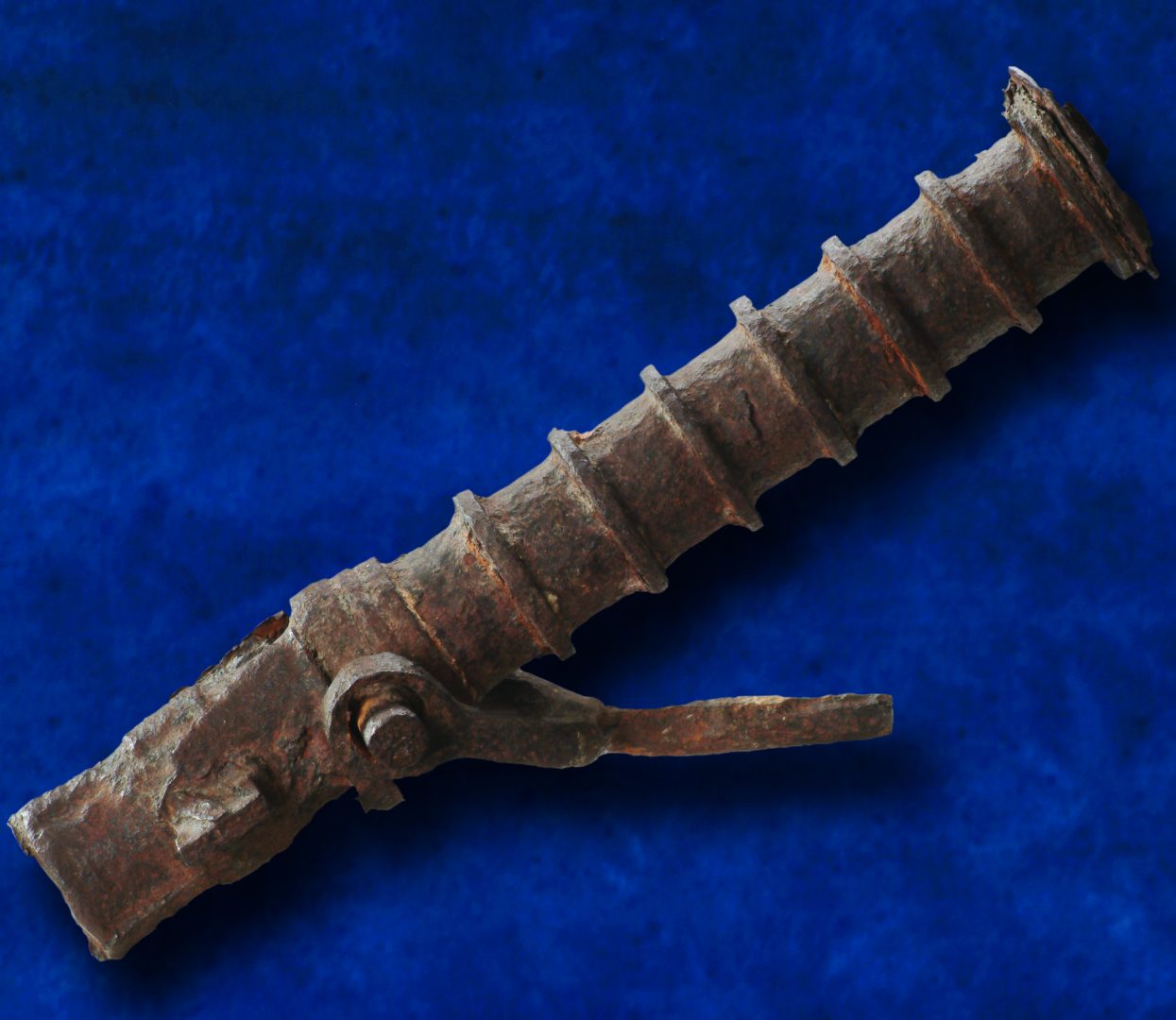
One of the most interesting objects in our Tudor collection is a cannon, or rather a ship’s gun, which dates to an interesting chapter in the period. Many people believe the Tudor period began with Henry VIII but in fact, it was the ascension of his father, Henry Tudor – Henry VII which kickstarted the dynasty. Henry VII and his marriage to Elizabeth of York united two noble houses – Elizabeth was the daughter of Edward IV who won the throne through conquest. Their union ended the Wars of the Roses but this did not mean that the turbulence was at an end, there were still pretenders to the throne to contend with. One of these characters is Perkin Warbeck whose full story is perhaps better suited to a blog of his own. Suffice to say, he besieged the city as part of his quest for the crown in 1495 and over the eleven days two of his ships were sunk by cannons on the walls of Reginald’s Tower. These ships still lie sleeping in the silt beneath the Suir and in 1900 a dredger pulled up the gun, which happens to be the oldest in Ireland. This episode in Waterford’s history gave rise to our city motto: Waterfordia Manet Urbs Intacta – Waterford Remains the Untaken City.
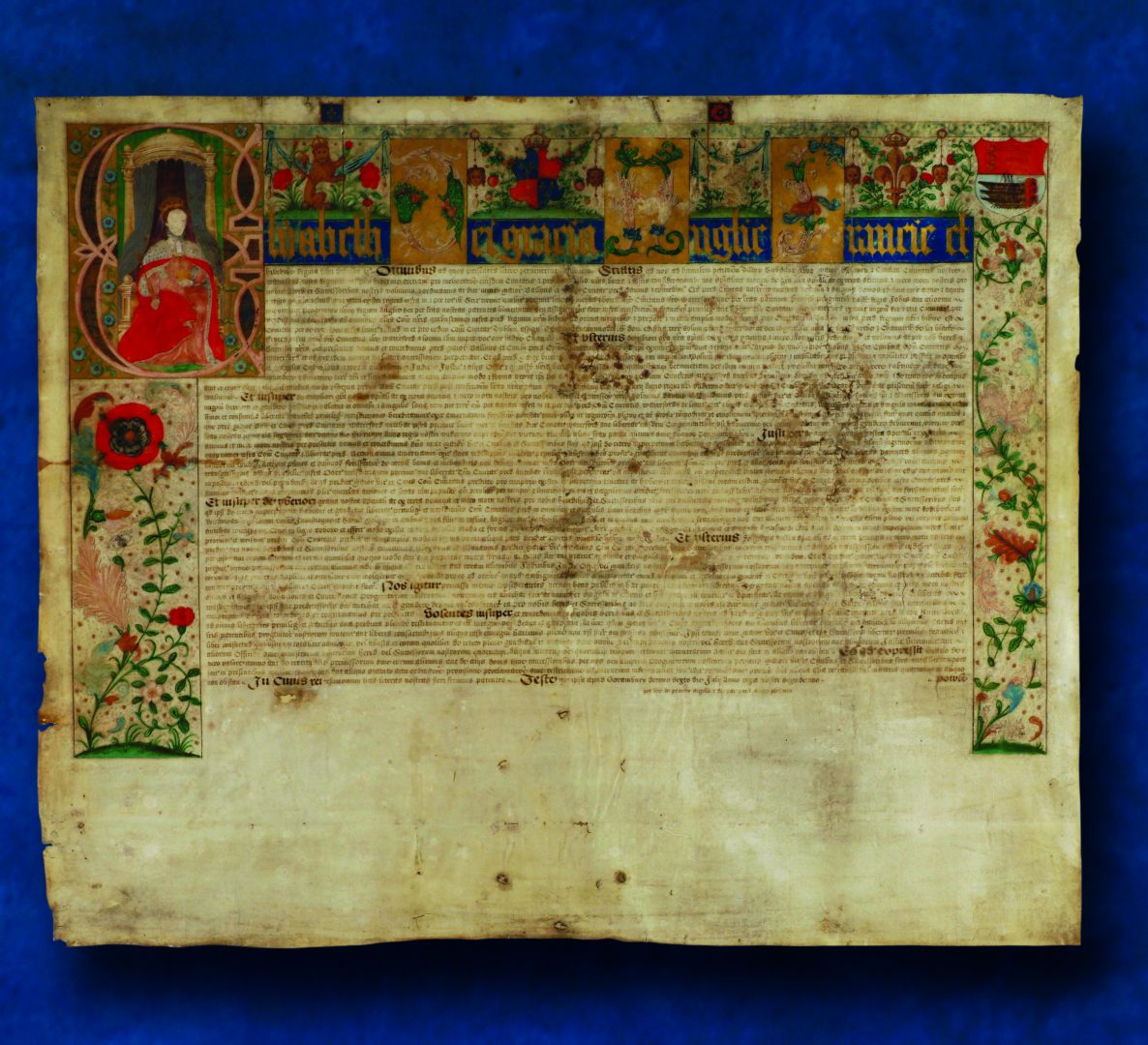
For those of you interested in Medieval calligraphy and artwork, the museum also features an extraordinary collection of illuminated charters featuring portraits of Henry and his children; Edward XI, Mary I and Elizabeth I. Elizabeth also features in the Great Parchment Book of Waterford’s most illustrated page, the 1566 entry. Here she is pictured in incredibly plain dress beneath a depiction of judgement day, perhaps not quite the regal position she might be expecting from an otherwise loyal city. Waterford’s position during the Tudor dynasty was a complicated thing, as a Royal City we were loyal to the crown, but the Reformation somewhat challenged this loyalty at times.
The Tudor necklace that has been making headlines is a beautiful example of the jewellery tradition of the Tudor world, and will hopefully remain at home in London for generations to see, study and appreciate. However, here in Waterford we have our fair share of Tudor treasures on display to whet your appetite as this story plays out over the next few months. So why not pop into the Medieval Museum to discover the turbulent history of Ireland’s very own Tudor city?
Book tickets online: www.waterfordtreasures.com